Professor Dame Anna Dominiczak
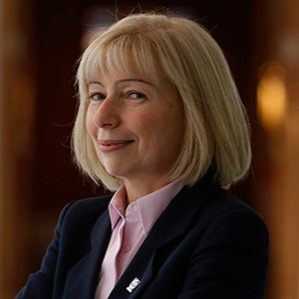
Regius Chair of Medicine, University of Glasgow
Talk Title: Precision medicine and precision public health
Professor Dame Anna Dominiczak DBE MD FRCP FAHA FRSE FMedSci is the Regius Chair of Medicine at the University of Glasgow and the Chief Scientific Advisor (Health) for the Scottish Government.
Recognized as a world leader in cardiovascular science and clinical academia, Professor Dominiczak held the British Heart Foundation Chair of Cardiovascular Medicine at the University of Glasgow from 1997 to 2010, and served as the Director of the BHF Cardiovascular Research Centre between 2000 and 2010. Her research focuses on hypertension, cardiovascular genomics, and precision medicine, with over 550 publications in top-tier journals and an h-index of 123. She has also secured more than £100M in research funding over the past decade, including leading a major fundraising initiative with the British Heart Foundation.
Between 2010 and 2020 she was Vice-Principal and Head of the College of Medical, Veterinary and Life Sciences at the University of Glasgow. She was the driving force behind the fundraising, development and delivery of the university’s clinical academic campus at the Queen Elizabeth University Hospital, where she led a triple helix partnership between academia, the NHS, and industry to accelerate innovation, and maximise patient benefits and economic growth.
In July 2022, Professor Dominiczak was appointed as the Chief Scientific Advisor (Health) for the Scottish Government, where she leads and coordinates health research and innovation, working in partnership with the NHS, academia and industry to develop rapid translation and adoption of transformative innovations for the Scottish NHS.
Professor Manuel Mayr
Bhf Professor Of Cardiovascular Proteomics, Imperial College London
Talk Title:
Precision proteomics for precision medicine
Manuel Mayr is the British Heart Foundation (BHF) Professor for Cardiovascular Proteomics and Co-director of Imperial's BHF Centre of Research Excellence.
He qualified in Medicine from the University of Innsbruck (Austria) in 1999. He then moved to London to undertake a PhD on combining proteomics and metabolomics. Upon completion of his PhD in 2005, he achieved promotion to Professor in 2011. In 2017, he was awarded a BHF Personal Chair, which he moved to Imperial College London in 2023.
His group uses proteomics in combination with other -omics technologies to integrate biological information in disease-specific networks that drive pathophysiological changes. While studying molecular interactions has been a research focus for many years and has provided important insight into biology, the attention has now shifted towards a more integrative network biology approach (Nat Rev Cardiol. 2021;18(5):313-330). He has published more than 300 peer review scientific papers. He is Consulting Editor for Circulation and JMCC, Associated Editor for Atherosclerosis and Cardiovascular Research and serves on the editorial boards of Circ Res, ATVB, Proteomics and Mol Cell Proteomics.
His academic achievements have been recognised by the inaugural Michael Davies Early Career Award of the British Cardiovascular Society (2007), the inaugural Bernard and Joan Marshall Research Excellence Prize of the British Society for Cardiovascular Research (2010), the Outstanding Achievement Award by the European Society of Cardiology (ESC) Council for Basic Cardiovascular Science (2013) and most recently the President's Distinguished Lecture of the International Society for Heart Research (ISHR, 2022).
Dr Mootaz Salman
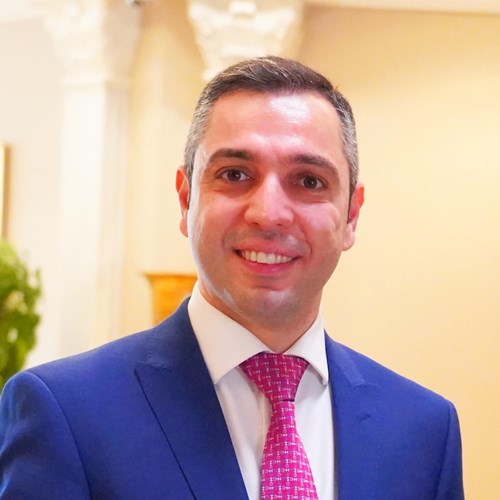
Principal Investigator, University of Oxford
Talk Title:
Targeting the Blood-Brain Barrier: New Frontiers in Neurodegeneration and Brain Health
Dr Mootaz Salman is a Group Leader in Cellular Neuroscience and MRC Career Development Fellow at the University of Oxford and Principal Investigator at the Oxford BHF centre for research Excellence.
Dr Salman moved to Oxford in 2020, and he was awarded the Leverhulme Research Fellowship that enabled him to start his independent work as Departmental Research Lecture. In 2022, he launched his research group at DPAG, which is primarily funded through his MRC Career Development Fellowship, and supported by other grants including BBSRC Pioneer Award, CONNECT - Horizon2020, ERC, Chief Scientist Office Research Grant and Royal Society.
His group is investigating mechanisms of blood-brain barrier (dys)function in neurodegenerative diseases and brain injuries using patient-derived stem cells. They design and build innovative dynamic 3D multicellular in vitro models to accurately recapitulate the brain and blood-brain barrier function under mechanobiological stimuli, neuroinflammation and other neurodegenerative-relevant conditions.
Dr Salman was awarded multiple accolades including the International Society of Neurochemistry (ISN) and APSN Young Neuroscientist Lectureship Award in 2022, The Society for Experimental Biology (SEB) 2024 President’s Medal for the Cell Biology Section and is named the Alzheimer’s Research UK David Hague Early Career Investigator of the Year in 2024 and recipient of the inaugural ALBA-Roche Research Prize for Excellence in Neuroscience 2024.
Professor Philip Bath
Professor of Stroke Medicine, Stroke Trials Unit, Nottingham
Talk Title: To Be Confirmed
Philip Bath is Stroke Association Professor of Stroke Medicine, and Chair and Head of the Division of Clinical Neuroscience at the University of Nottingham.
Clinically, he contributes to the Nottingham University Hospitals NHS Trust Stroke Service (in-patient stroke care). As an NIHR Senior Investigator, his main research interests cover the treatment of acute stroke (blood pressure lowering), prevention of stroke recurrence and cognitive impairment (antiplatelet agents, blood pressure and lipid lowering) and enhancement of recovery using stem cells.
Professor Mark Howarth
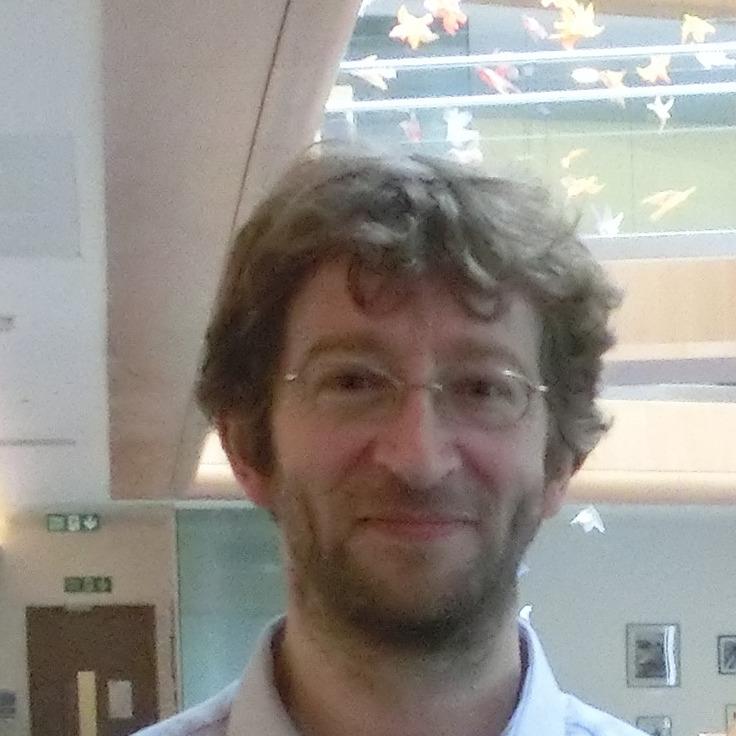
Professor, Cambridge University
Talk Title:
Bacterial superglues to empower biologics discovery, cell therapy and disease prevention
Mark did graduate work in molecular immunology at Oxford University Institute of Molecular Medicine and Southampton University Cancer Sciences. In his postdoctoral work at MIT he developed tools in chemical biology, advanced microscopy and nanotechnology to understand receptor trafficking.
He became Professor of Protein Nanotechnology at Oxford University Department of Biochemistry, receiving the Royal Society of Chemistry Norman Heatley Prize for Chemical Biology. He is a founder of SpyBiotech, which is now running vaccine clinical trials, and several members of his group have founded their own start-up companies.
Mark gives lectures and workshops on Entrepreneurship to undergraduates and graduate groups. Resources from his group have been distributed to more than a thousand academic groups and licensed to a range of companies.
His work has been funded by ERC, BBSRC, EPSRC, MRC, Wellcome Trust and through collaborations with multiple pharma and biotech companies. He moved to Cambridge to take up the Sheild Chair of Pharmacology in 2022.
Professor Patricia Maguire

Professor, University College Dublin
Talk Title: Balancing AI Innovation with Ethical Considerations in Healthcare
Patricia Maguire is a biomedical scientist with an exceptional record of high-performance research including publication in leading international journals (Nat Comm, PNAS, Blood, Proteomics etc), that has earned a global reputation as an evangelist of interdisciplinary research. As PI, I have been awarded more than €5m in competitive research funding, including €1.5m in non-exchequer income from Bayer AG, Sanofi, Actelion Pharmaceuticals, Mallinckrodt Pharmaceuticals and Google. My outstanding reputation has led to several prestigious invited lectures (e.g. Siemens Healthineers, Université de Strasbourg (INSERM), University of Tübingen, International Society of Thrombosis & Haemostasis). I have led several global research collaborations with esteemed institutions such as Harvard Medical School & Cambridge University, resulting in senior author high-impact publications (Blood, PNAS, Proteomics).
Professor Sir Mark Caulfield
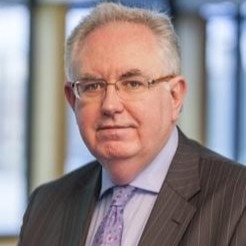
Vice Principal (health), Queen Mary University
President. British Pharmacological Society
Talk Title:
Delivering the 100,000 Genomes Project: lessons learned, and clinical benefits gained
Professor Sir Mark Caulfield is Professor of Clinical Pharmacology at Queen Mary University of London and the CEO of Barts Life Sciences, a research and innovation partnership between Queen Mary University of London and Barts Health NHS Trust. From January 2022 he is Vice Principal for Health for Queen Mary’s Faculty of Medicine and Dentistry.
Professor Caulfield graduated in Medicine in 1984 from the London Hospital Medical College and trained in Clinical Pharmacology at St Bartholomew’s Hospital where he developed a research programme in molecular genetics of hypertension and translational clinical research.
At Queen Mary University of London Professor Caulfield has made substantial contributions to the discovery of genes related to blood pressure, cardiovascular health, cancer and rare diseases. His research has changed national and international guidance for high blood pressure. He was Director of Queen Mary’s William Harvey Research Institute between 2002-2020 and was elected to the Academy of Medical Sciences in 2008.
Professor Caulfield was appointed Chief Scientist for Genomics England in 2013, charged with delivery of the 100,000 Genomes Project on whole genome sequencing in rare disease, cancer and infection. At Genomics England, he was instrumental in delivering the 100,000 Genomes Project which has delivered life-changing results for many patients. He has also worked with NHS England to co-create the National Genomic Test Directory, which offers equitable access for 56 million people to appropriate genomic tests. Professor Caulfield was awarded a knighthood in 2019 for his leadership of the 100,000 Genomes Project.
In July 2021, Professor Caulfield stepped down from his role as Chief Scientist for Genomics England and is taking a major leadership in Barts Life Sciences a partnership between Queen Mary University of London and Barts Health NHS Trust. This is driving the development of a world-leading life sciences campus at Whitechapel focusing on digital precision healthcare. He is a member of the Barts Health NHS trust Board and is the President Elect of the British Pharmacological Society. Sir Mark is Vice Principal (Health) for Queen Mary University of London.
Professor Yu Huang
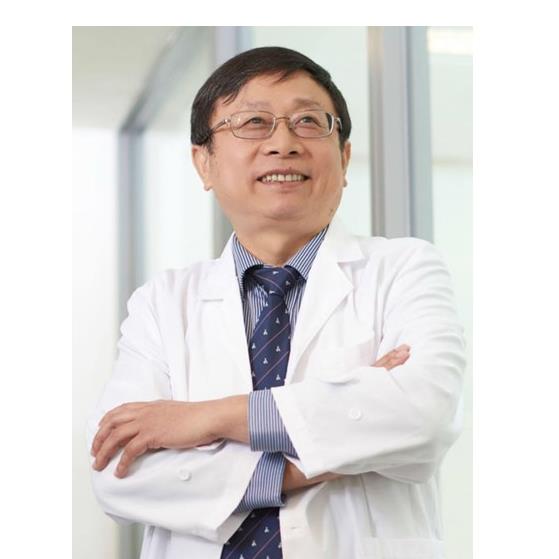
Head Of Department Of Biomedical Sciences, City University Of Hong Kong
Talk Title:
Beyond Prostacyclin: The Mechanical Regulation of Endothelial Function
Yu Huang was awarded BSc by Fudan University Shanghai Medical College and PhD in Pharmacology by University of Cambridge. He is Jeanie Hu Professor of Biomedical Sciences and Chair Professor at City University of Hong Kong. Prior to his current position, he was Chair Professor and founding Director of Heart and Vascular Institute at Chinese University of Hong Kong. He is Vice-President in Chinese Section of International Society for Heart Research (ISHR) and Chinese Association of Physiological Sciences. He previously was President in Asian Society for Vascular Biology and Vice-President in Chinese Society of Vascular Biology. He is a Fellow of ISHR and International Union of Physiological Sciences Academy. His research focuses on vascular pharmacology and pathology through elucidating molecular processes in hypertension, diabetes and atherosclerosis, uncovering novel biomarkers for vascular pathogenesis, and developing pharmacological venues to reverse vascular dysfunction. He has co-authored 493 SCI publications. He has served as an editorial board member for 18 SCI-indexed journals. He is also the Hong Kong RGC - Senior Research Fellow and Croucher Senior Research Fellow.