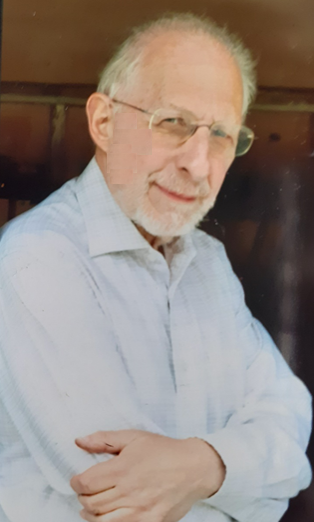
Dr Jeffrey Aronson
Centre for Evidence Based Medicine, Nuffield Department of Primary Care Health Sciences, University of Oxford
Talk title: "All the circumstances of the patient". The Edinburgh Medical School—the first 300 years."
Biography: Dr Jeffrey Aronson is a Physician and Clinical Pharmacologist working in the Centre for Evidence Based Medicine in the University of Oxford.
He has written widely about all aspects of clinical pharmacology and about medical history, the philosophy of medicine, and medical language. He writes a weekly BMJ opinion column under the general title “When I Use a Word ….”.
He chairs the British Pharmacopoeia Commission’s Expert Advisory Group on Pharmacy and Nomenclature and is a member of the WHO’s Expert Advisory Panel on International Pharmacopoeia and Pharmaceutical Preparations.
He is President Emeritus, an Honorary Fellow, and immediate past Vice-President Publications of the British Pharmacological Society; an Honorary Fellow of the Faculty of Pharmaceutical Medicine of the Royal College of Physicians; an Honorary Member of the International Society of Pharmacovigilance (ISoP); and an Emeritus Fellow of Green-Templeton College, Oxford.
Abstract: Edinburgh University, originally called Edinburgh College, was the last of the four ancient Scottish universities to have been founded, in 1582, under a charter from King James VI, awarded to the Edinburgh Town Council. The three other ancient Scottish universities, St Andrews, Glasgow, and Aberdeen, had all been founded in the 15th century. However, Edinburgh was the first to establish a medical school, in 1726, the oldest medical school not only in Scotland but in the English-speaking world.
Its foundation followed a series of medical innovations. First, the establishment of a new physic garden in 1670, important in the subsequent establishment of the Edinburgh College of Physicians by royal charter in 1681. The Edinburgh Pharmacopeia, a priority of the new College, appeared in 1699, delayed by disputes among the Fellows.
The College of Physicians was founded on two conditions: that the physicians could inspect apothecaries' wares, as they wanted to do, but only if accompanied by representatives of the surgeons and apothecaries, and that the physicians would not teach medicine.
Nevertheless, the Town Council, who, uniquely in Scotland, controlled the University, sought to establish a medical school, wanting to attract students, who otherwise would go to Oxford or Cambridge, or, especially if dissenters, to continental schools, such as Leyden. The surgeons also wanted to establish a medical school, since surgical apprenticeships had become unsatisfactory. The physicians were not opposed, and a school was eventually established in which all medical subjects would be taught, principally anatomy and surgery, but also chemistry, botany, medical theory and practice, and materia medica, an earlier name for what we now call clinical pharmacology.
Among the many innovations to which Edinburgh practitioners or graduates contributed over the succeeding years, several were pharmacological, including Gregory's powder, ether, digitalis, physostigmine, and amyl nitrate, and concepts that prefigured receptor theory.
Famous names associated with the medical school, whether alumni or teachers, include Mungo Park, James Young Simpson, Joseph Lister, Joseph Bell (Arthur Conan Doyle's model for Sherlock Holmes), Richard Bright, Thomas Lauder Brunton, Abraham Colles, Dominic John Corrigan, James Lind, David Livingstone, and Sir Patrick Manson.
Edinburgh is also noted for the establishment of the first academic school of general practice, which started as a General Practice Teaching Unit in 1948 and became the first University Department of General Practice in the world, when the first Professor of General Practice, Richard Scott (1914-1983), was appointed, in 1963.